Doctor of Business Administration: Fees, Admssion 2026, Eligibility, Cut-off, Syllabus, Placement
3-5 Years | Post Graduate | Doctorate
Doctor of Business Administration
An DBA (Doctor of Business Administration) is an advanced doctoral-level management program designed for experienced professionals who want to develop expertise in business strategy, leadership, management, and applied research. The program focuses on applying advanced business knowledge to solve complex organizational challenges and make effective strategic decisions in today’s competitive business environment.
Through a DBA, learners can develop expertise in key areas such as Strategic Management, Business Leadership, Organizational Development, Business Analytics, Finance, Marketing, Entrepreneurship, and Innovation. The program emphasizes advanced problem-solving, critical thinking, research, decision-making, and leadership skills that can be applied across different industries and organizations.

Why Choose an DBA?
A DBA provides learners with advanced knowledge of business and management practices. The program helps develop essential skills in executive leadership, strategic thinking, research, communication, problem-solving, and decision-making. Students can explore advanced areas of business and management while gaining knowledge that can be applied to complex real-world organizational challenges.
DBA Program Highlights
Program
Doctor of Business Administration
Duration
3 Years
Level
Doctoral Program
Mode
Online / Distance Learning
Ready to Start Your DBA Journey?
Get personalized guidance to choose the right DBA program, university, specialization, and learning mode.
Get Free Counselling →DBA Course Specifications
Explore the key details of the Doctor of Business Administration program, including duration, eligibility, learning mode and course structure.
| Specification | Details |
|---|---|
| Course Name | Doctor of Business Administration (DBA) |
| Course Level | Doctoral |
| Duration | 3 Years |
| Eligibility | Master's Degree from a Recognized University |
| Mode of Learning | Online / Distance Learning |
| Specializations | Strategic Management, Business Leadership, Finance, Marketing, Human Resources, Business Analytics & More |
| Course Structure | Research and Coursework-based |
| Assessment | Research, Assignments, Presentations, Projects & Dissertation |
| Medium of Instruction | English |
| Career Opportunities | Executive Management, Business Consulting, Leadership, Research, Academia & Entrepreneurship |
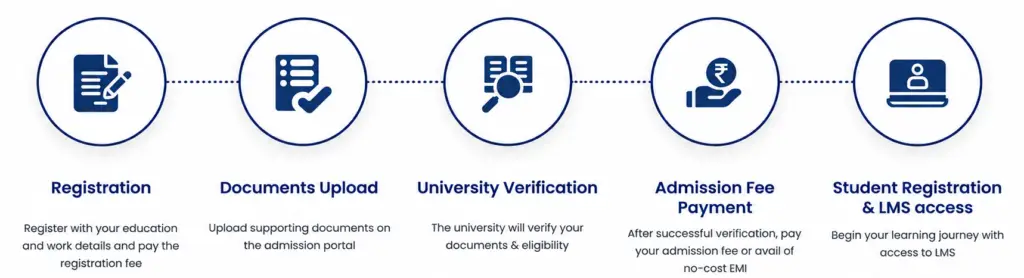
Admission Process
Top in-demand Online DBA Dual Specializations for 2026
| Specialization / Research Area | Key Focus Areas | Career Opportunities |
|---|---|---|
| 1. Strategic Management | Focuses on strategic planning, competitive advantage, organizational growth, and long-term business decision-making. | Strategy consultant, business strategist, senior management roles. |
| 2. Business Leadership | Develops advanced leadership skills, executive decision-making, organizational leadership, and management capabilities. | Business leader, executive manager, leadership consultant. |
| 3. Finance | Covers financial strategy, investment management, corporate finance, financial analysis, and risk management. | Finance executive, financial consultant, investment manager. |
| 4. Marketing Management | Explores advanced marketing strategies, consumer behaviour, digital marketing, brand management, and market research. | Marketing director, brand strategist, marketing consultant. |
| 5. Human Resource Management | Focuses on talent management, organizational behaviour, employee development, and strategic human resources. | HR director, HR consultant, organizational development leader. |
| 6. Business Analytics | Combines data analysis, business intelligence, predictive analytics, and data-driven strategic decision-making. | Business analyst, analytics consultant, data-driven strategy roles. |
| 7. Entrepreneurship & Innovation | Covers entrepreneurship, innovation management, business development, startup strategy, and new venture creation. | Entrepreneur, innovation manager, business development consultant. |
| 8. Operations & Supply Chain Management | Focuses on operations strategy, supply chain management, process improvement, logistics, and organizational efficiency. | Operations director, supply chain consultant, operations strategist. |
Online MBA Education Course Subject
| DBA Coursework & Research Structure | |
|---|---|
| Year 1 | Year 2 |
| Advanced Business Research Methods | Strategic Management Research |
| Business Theory & Management Practices | Leadership & Organizational Development |
| Quantitative & Qualitative Research Methods | Business Analytics & Decision Making |
| Organizational Behaviour | Innovation & Entrepreneurship |
| Strategic Management | Advanced Business Research |
| Financial & Managerial Decision Making | Research Proposal Development |
| Marketing & Consumer Behaviour | Applied Business Research |
| Research Design & Methodology | Doctoral Research Seminar |
| DBA Research & Coursework: Second Year | |
|---|---|
| Year 2: Coursework | Year 2: Research |
| Strategic Management Research | Research Proposal Development |
| Leadership & Organizational Development | Applied Business Research |
| Business Analytics & Decision Making | Doctoral Research Seminar |
| Innovation & Entrepreneurship | Research Paper / Publication |
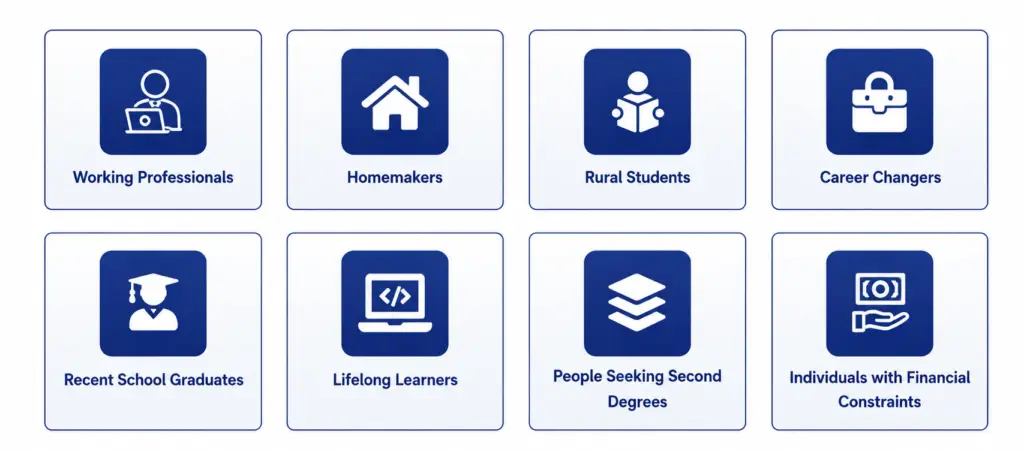
Who Should Enroll
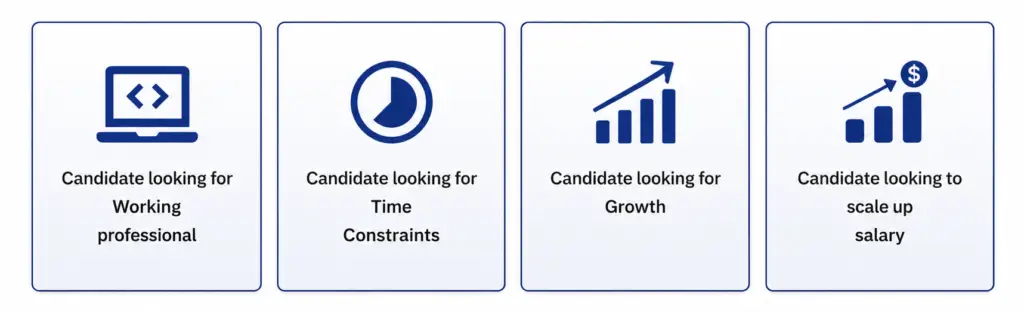
How DBA Assessments and Research are Conducted?
- Research Methodology: DBA students learn advanced research methodologies to investigate real-world business and management challenges using structured academic approaches.
- Case Studies: Case studies allow learners to examine complex business situations, evaluate different approaches, and develop practical solutions based on research and evidence.
- Assignments and Projects: Students may complete advanced assignments and business projects that demonstrate their ability to apply management theories and research findings to practical organizational situations.
- Research Papers: Learners may be required to prepare research papers that explore specific business, management, leadership, or organizational topics using academic research methods.
- Presentations and Seminars: DBA programs may include presentations and research seminars where learners communicate their findings, ideas, and recommendations to faculty members and other professionals.
- Doctoral Dissertation: A major component of a DBA is the doctoral research project or dissertation, where learners conduct in-depth applied research on a relevant business or management problem.
Admission Requirements for DBA Programs
Admission to a Doctor of Business Administration program generally involves meeting academic and professional requirements established by the institution. DBA programs are typically designed for professionals who already have experience in business, management, leadership, or related fields and want to develop advanced expertise through applied research.
Eligibility Requirements
Academic Qualification
- Master’s Degree: Applicants generally need a master’s degree or equivalent postgraduate qualification from a recognized institution.
- Professional Experience: Many DBA programs are designed for experienced professionals and may require relevant managerial, leadership, or business experience.
- Research Interest: Applicants should have an interest in conducting applied research and solving real-world business and organizational problems.
Is a DBA Valuable for Career Growth?
A DBA can provide experienced professionals with advanced knowledge and research capabilities that can support career growth in business, management, consulting, leadership, and academia. The program focuses on applying research and advanced management concepts to complex organizational challenges.
The value of a DBA can also depend on factors such as the reputation of the institution, program structure, academic quality, professional experience, and the learner’s ability to apply the knowledge gained through the program. Practical research, strategic thinking, leadership development, and problem-solving skills can help professionals contribute more effectively to organizational decision-making and business transformation.
Who Can Apply for DBA Distance Learning Courses?