Doctor of Philosophy: Fees, Admssion 2026, Eligibility, Cut-off, Syllabus, Placement
3-6 Years | Post Graduate | Doctorate
Doctor of Philosophy
A PhD (Doctor of Philosophy) is an advanced doctoral research program designed to develop deep expertise and original knowledge in a specific academic or professional field. The program focuses on independent research, critical thinking, and the development of new insights that can contribute to academic knowledge and real-world applications.
Through a PhD, students can specialize in areas such as Business Management, Finance, Marketing, Human Resources, Computer Science, Engineering, Education, Economics, Psychology, and other specialized disciplines.
A PhD can prepare learners for a wide range of academic, research, teaching, consulting, and senior professional opportunities, while also providing a strong foundation for those interested in becoming researchers, university faculty members, subject-matter experts, or contributing original research to their field.

Why Choose an Phd?
A PhD provides learners with advanced knowledge and expertise in a specialized academic or professional field. The program helps develop essential skills in research, critical thinking, analytical reasoning, academic writing, problem-solving, and independent decision-making. Students can explore specialized areas of study while conducting original research and developing knowledge that can contribute to academic, professional, and real-world applications.
Phd Program Highlights
Program
Doctor Of Philosophy
Duration
2 Years
Level
Postgraduate Program
Mode
Online / Distance Learning
Ready to Start Your Phd Journey?
Get personalized guidance to choose the right Phd program, university, specialization, and learning mode.
Get Free Counselling →PhD Course Specifications
Explore the key details of the Doctor of Philosophy program, including duration, eligibility, research mode and academic structure.
| Specification | Details |
|---|---|
| Course Name | Doctor of Philosophy (PhD) |
| Course Level | Doctoral / Research Program |
| Duration | Typically 3–6 Years |
| Eligibility | Master's Degree or Equivalent Qualification from a Recognized University |
| Mode of Study | Full-Time / Part-Time / As Offered by the University |
| Research Areas | Business Management, Finance, Marketing, Human Resources, Economics, Education, Computer Science & More |
| Course Structure | Coursework, Research Proposal & Doctoral Research |
| Assessment | Coursework, Research Progress, Presentations & Dissertation |
| Medium of Instruction | English |
| Career Opportunities | University Faculty, Researcher, Academic, Consultant, Subject-Matter Expert & Senior Professional Roles |
Admission Process

Top in-demand Online PHD Dual Specializations for 2026
| Research Area | Key Focus Areas | Career / Research Opportunities |
|---|---|---|
| 1. Business Management | Focuses on organizational strategy, management practices, decision-making, business performance, and organizational growth. | Management researcher, professor, consultant, business strategist. |
| 2. Finance | Covers financial management, investment analysis, corporate finance, financial markets, risk management, and financial decision-making. | Finance researcher, professor, financial consultant, analyst. |
| 3. Marketing | Explores consumer behaviour, digital marketing, brand management, marketing strategy, market research, and customer engagement. | Marketing researcher, professor, brand consultant, marketing strategist. |
| 4. Human Resource Management | Focuses on employee behaviour, talent management, organizational development, leadership, workplace culture, and HR strategy. | HR researcher, professor, organizational consultant, HR strategist. |
| 5. Economics | Covers economic theory, policy analysis, business economics, market behaviour, development economics, and economic research. | Economist, researcher, professor, policy analyst, consultant. |
| 6. Computer Science & Information Technology | Explores artificial intelligence, data science, information systems, cybersecurity, software technologies, and emerging digital solutions. | Research scientist, professor, technology researcher, IT consultant. |
| 7. Education | Focuses on teaching and learning methods, educational leadership, curriculum development, educational technology, and policy research. | Professor, education researcher, academic leader, education consultant. |
| 8. Engineering & Technology | Covers advanced research in engineering, technological innovation, sustainable solutions, systems development, and applied technology. | Research scientist, professor, engineer, technology specialist. |
Online PHD Education Course Subject
| PhD Coursework: First Year | |
|---|---|
| Semester 1 | Semester 2 |
| Research Methodology | Advanced Research Methods |
| Research Design & Methodology | Quantitative & Qualitative Research |
| Literature Review & Academic Writing | Research Data Analysis |
| Research Ethics | Research Seminar |
| Subject-Specific Coursework | Advanced Subject Studies |
| Research Proposal Development | Research Proposal Presentation |
| Academic & Scholarly Communication | Research Publication Techniques |
| Research Tools & Techniques | Preliminary Research Work |
| PhD Research & Coursework: Second Year | |
|---|---|
| Year 2: Advanced Coursework | Year 2: Research |
| Advanced Subject-Specific Studies | Literature Review & Research Analysis |
| Advanced Research Methodology | Data Collection & Analysis |
| Specialized Research Techniques | Research Progress Seminar |
| Academic & Scholarly Writing | Research Paper Development |
| Research Ethics & Academic Integrity | Doctoral Research Work |
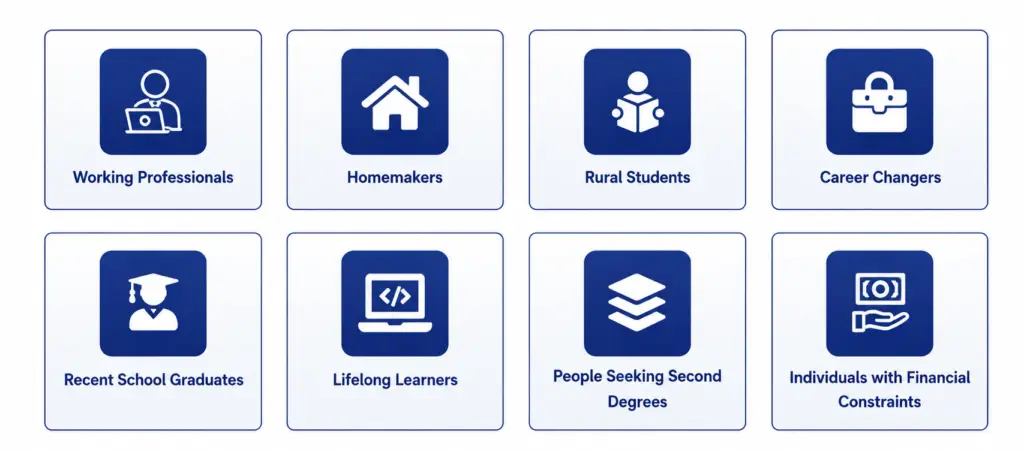
Who Should Enroll

How PhD Research and Assessment are Conducted?
- Research Methodology: PhD scholars learn advanced research methodologies to investigate important questions and develop new knowledge within their chosen field of study.
- Literature Review: Scholars conduct detailed reviews of existing academic research to understand previous work, identify research gaps, and establish a strong foundation for their research.
- Research Proposal: Students generally develop a detailed research proposal outlining their research problem, objectives, methodology, literature review, and expected contribution.
- Data Collection and Analysis: Depending on the research area, scholars may collect and analyse qualitative or quantitative data using appropriate research tools and techniques.
- Research Presentations and Seminars: PhD scholars may present their research progress, findings, and ideas through seminars, presentations, conferences, or academic discussions.
- Doctoral Dissertation: A major component of a PhD is the doctoral dissertation or thesis, which presents the scholar’s original research, findings, analysis, and contribution to the chosen field.
Admission Requirements for PhD Programs
Admission to a PhD program generally involves meeting academic and research requirements established by the university. Applicants are typically expected to have a strong academic background and an interest in conducting independent research in a specific area of study.
Types of PhD Admission Requirements
Academic Qualification
- Master’s Degree: Applicants generally need a master’s degree or an equivalent postgraduate qualification from a recognized university.
- Research Proposal: Some PhD programs may require applicants to submit a research proposal outlining their intended area of research and proposed methodology.
- Entrance Examination: Some universities may conduct an entrance examination to assess the applicant’s subject knowledge, research aptitude, and analytical abilities.
- Interview: Applicants may be required to participate in a research interview or discussion with faculty members to assess their research interests and suitability for the program.
Is a PhD Valuable for Career Growth?
A PhD can provide learners with advanced expertise and research capabilities in a specialized academic or professional field. The program develops independent research skills, critical thinking, analytical reasoning, academic writing, and the ability to investigate complex problems.
The value of a PhD can depend on factors such as the reputation of the university, research quality, academic discipline, research experience, and the learner’s ability to apply their expertise. A PhD can support opportunities in academia, research, teaching, consulting, specialized professional roles, and other careers that value advanced subject expertise and research capabilities.
Who Can Apply for PHD Distance Learning Courses?