
Bachelor Of Science : Fees, Admssion 2026, Eligibility, Cut-off, Syllabus, Placement
3 Years | Under Graduate | Science
Bachelor Of Science
A BSc (Bachelor of Science) is an undergraduate degree program designed to build strong foundational knowledge and practical understanding in scientific, technical, and analytical fields. The program helps learners develop subject-specific expertise while strengthening problem-solving, logical thinking, and research-oriented skills.
Through a BSc, students can explore areas such as Physics, Chemistry, Mathematics, Computer Science, Biology, Biotechnology, Information Technology, and other science-related disciplines, depending on the chosen specialization. The course combines theoretical concepts with practical learning to help students understand scientific principles and their real-world applications.
A BSc can prepare learners for a variety of technical, scientific, research, analytical, and industry-oriented career opportunities, while also providing a strong academic foundation for pursuing postgraduate studies such as an MSc or other advanced professional programs.

Why Choose an B.Sc?
A BSc provides learners with a strong foundation in scientific concepts, analytical thinking, and practical knowledge. The program helps develop essential skills in problem-solving, logical reasoning, research, observation, and technical understanding. Students can explore different areas of science while gaining knowledge that can be applied to academic, research, and real-world professional settings.
B.Sc Program Highlights
Program
Bachelor Of Science
Duration
3 Years
Level
Undergraduate Program
Mode
Online / Regular Learning
Ready to Start Your B.Sc Journey?
Get personalized guidance to choose the right BSC program, university, specialization, and learning mode.
Get Free Counselling →BSc Course Specifications
Explore the key details of the Bachelor of Science program, including duration, eligibility, learning mode and course structure.
| Specification | Details |
|---|---|
| Course Name | Bachelor of Science (BSc) |
| Course Level | Undergraduate |
| Duration | 3 Years |
| Eligibility | 10+2 or Equivalent Qualification from a Recognized Board |
| Mode of Learning | Online / Distance / Correspondence Learning |
| Specializations | Physics, Chemistry, Mathematics, Computer Science, Biology, Biotechnology, Information Technology & More |
| Course Structure | Semester-based |
| Assessment | Assignments, Practical Work, Examinations & Projects |
| Medium of Instruction | English |
| Career Opportunities | Research, Laboratory, IT, Healthcare, Education, Data Analysis & Science-related Roles |
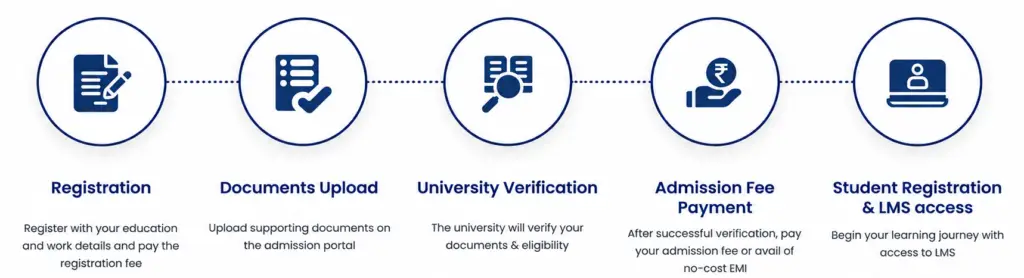
Admission Process
Top in-demand B.Sc Dual Specializations for 2026
| BSc Specialization | Key Focus Areas | Career Opportunities |
|---|---|---|
| 1. Computer Science | Focuses on programming, algorithms, software development, databases, and computer systems. | Software developer, web developer, systems analyst, and IT professional. |
| 2. Information Technology | Covers information systems, networking, databases, web technologies, and IT infrastructure. | IT analyst, system administrator, technical support specialist, and IT consultant. |
| 3. Mathematics | Develops knowledge of mathematical concepts, statistics, analytical methods, and quantitative problem-solving. | Data analyst, statistician, research assistant, and quantitative professional. |
| 4. Physics | Explores mechanics, electricity, thermodynamics, modern physics, and fundamental scientific principles. | Laboratory assistant, research professional, technical analyst, and science educator. |
| 5. Chemistry | Focuses on organic, inorganic, physical, and analytical chemistry along with laboratory techniques. | Laboratory technician, quality control analyst, research assistant, and chemical industry professional. |
| 6. Biology | Studies living organisms, genetics, ecology, cellular biology, and biological processes. | Laboratory assistant, research assistant, healthcare support roles, and environmental professional. |
| 7. Biotechnology | Combines biological sciences with technology and explores areas such as genetics, microbiology, and biotechnology applications. | Biotechnology technician, laboratory professional, research assistant, and quality control analyst. |
| 8. Data Science | Combines statistics, data analysis, programming, and analytical techniques to interpret and utilize data. | Data analyst, junior data scientist, business analyst, and data research professional. |
Online B.Sc Education Course Subject
| BSc Subjects: First Year | |
|---|---|
| Semester 1 | Semester 2 |
| Mathematics – I | Mathematics – II |
| Physics – I | Physics – II |
| Chemistry – I | Chemistry – II |
| Computer Fundamentals | Programming Fundamentals |
| Environmental Science | Laboratory Practical – I |
| Communication Skills | Laboratory Practical – II |
| BSc Subjects: Second Year | |
|---|---|
| Semester 3 | Semester 4 |
| Mathematics – III | Mathematics – IV |
| Physics – III | Physics – IV |
| Chemistry – III | Chemistry – IV |
| Computer Applications | Data Analysis & Statistics |
| Research Methodology | Laboratory Practical – III |
| Laboratory Practical – IV | Environmental & Applied Science |
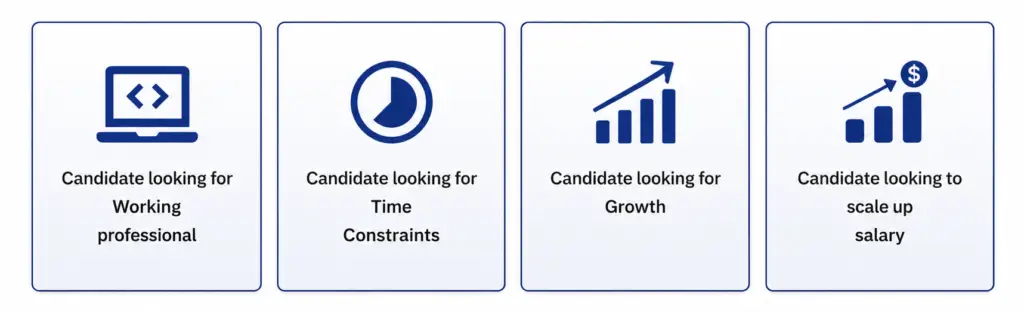
Who Should Enroll
How Online BSc Exams are Conducted?
- Online Examinations: Depending on the university and program, students may be required to appear for examinations through an online examination platform. The examination process may include identity verification and other security measures.
- Remote Proctoring: Some online BSc programs may use remote proctoring systems to monitor students during examinations. These systems can use automated technology or live monitoring to maintain examination integrity.
- Timed Exams: Online examinations may have a fixed time limit within which students are expected to complete their questions and submit their answers.
- Assignments and Projects: Students may be assessed through assignments, practical work, projects, and other academic activities. These assessments help evaluate their understanding of scientific concepts and their ability to apply knowledge.
- Practical Examinations: Depending on the BSc specialization, practical examinations or laboratory-based assessments may form an important part of the evaluation process.
- Viva and Oral Assessment: Some BSc programs may include viva or oral assessments where students answer questions related to their subjects, practical work, projects, or academic understanding.
Entrance Exams for BSc Programs
Admission requirements for BSc programs vary depending on the university, specialization, and mode of education. Some institutions offer admission based on academic merit, while others may require students to qualify for an entrance examination. Students should check the specific admission requirements of their chosen university before applying.
Types of Entrance Exams
University and National-Level Exams
- University Entrance Exams: Some universities conduct their own entrance examinations for admission to specific BSc programs or specializations. The subjects and examination pattern depend on the university and course.
- CUET: The Common University Entrance Test (CUET) is used by participating universities for admission to various undergraduate programs. Depending on the university and BSc program, students may be required to appear for relevant CUET subjects.
- Merit-Based Admission: Many BSc programs may offer admission based on the student’s performance in their qualifying examination. The required subjects and minimum marks can vary by university and specialization.
Is a BSc Degree Acceptable in the Job Market?
A BSc degree can provide students with academic knowledge and practical skills that are relevant to a variety of scientific, technical, analytical, and industry-oriented roles. The career opportunities available to graduates depend on their specialization, skills, experience, and the requirements of individual employers.
The reputation and recognition of the university and program can also influence how the qualification is viewed by employers and other institutions. Students can strengthen their career prospects by developing practical knowledge, technical skills, communication abilities, analytical thinking, and relevant industry experience during their studies.
A BSc can also provide a foundation for higher education. Graduates may choose to pursue postgraduate programs such as an MSc or other specialized qualifications to develop advanced knowledge in their chosen field.
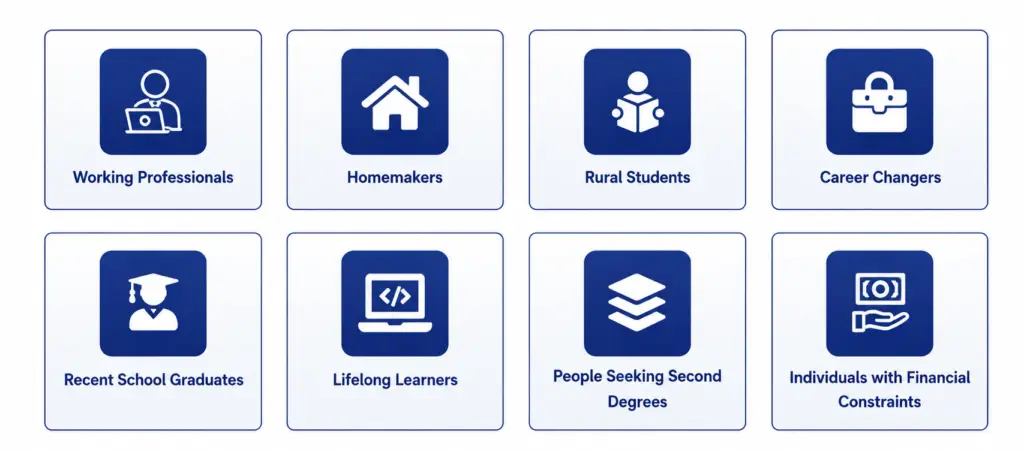
Who Can Apply for B.Sc Distance Learning Courses?
FAQ'S
The validity of an online or distance degree depends on the university and the applicable regulatory approvals. Students should check the recognition and accreditation status of the university and program before enrolling.
Eligibility varies depending on the course and university. Generally, undergraduate programs require completion of Class 12, while postgraduate programs require a relevant bachelor’s degree from a recognized university.
Students can generally apply online by submitting their academic details and required documents. Depending on the university and program, admission may be based on eligibility, merit, or an entrance examination.
Depending on the program, learning may include recorded or live lectures, digital study materials, assignments, projects, and online or designated examination arrangements. The exact assessment process varies by university.
Recognition and accreditation vary by institution and program. Students should refer to the university’s official recognition and accreditation information before making an admission decision.
Course fees vary according to the university, program, and specialization. Many institutions offer semester-wise or installment-based payment options. Students should check the latest fee structure and available payment options before admission.